
Let’s be honest for a second. If you’re running a painting business today, you’re probably tired of hearing the same old marketing advice. “Just get your name out there,” they say. “Word of mouth is king,” they promise. And sure, a decade ago, a solid reputation in your local neighborhood and a few strategically placed yard signs might have been enough to keep your crew busy year-round.
But here’s the kicker: the game has fundamentally changed. We’re operating in a landscape where the vast majority of homeowners don’t ask their neighbor for a painter recommendation anymore; they ask their phone. They type “best interior painter near me” into Google, or increasingly, they ask an AI assistant like ChatGPT or Perplexity to find them a reliable contractor.
Look, if your painting company isn’t showing up prominently in those crucial moments of high intent, you’re not just losing a lead; you’re handing money directly to your competitors. It’s that simple. And let’s face it, nobody wants to leave money on the table, especially not after all the hard work you put into perfecting your craft.
Understanding the New Rules of Getting Painting Leads
This isn’t just another generic SEO article filled with jargon you don’t have time to decipher. No, sir. This is the definitive, no-nonsense guide to SEO for painters in 2026. We’re going to tear down the complexities of search engine optimization and rebuild them into actionable, practical strategies that actually drive revenue. We’ll cover everything from dominating your local Google Maps pack to preparing your business for the undeniable wave of AI-driven search. We’ll even touch on the subtle psychological triggers that make homeowners choose your business over the competition. Believe me, it’s more than just a pretty paint job.
Grab a cup of coffee, because we’re about to dive deep into how you can transform your online presence from a hidden gem into the most sought-after painting service in your city. It’s time to stop hoping for leads and start generating them consistently. Your future clients are waiting.

Why SEO for Painters is a Non-Negotiable Investment in 2026: The Digital Shift is Real
Remember when SEO meant cramming the phrase “house painter Chicago” onto your homepage fifty times and hoping for the best? Those days are long gone, and frankly, good riddance. Today, Google’s algorithms are incredibly sophisticated. They don’t just read words; they understand context, intent, and authority. Furthermore, we are witnessing the rapid integration of AI into the search experience. Google’s Search Generative Experience (SGE) and standalone AI platforms are changing how people find information.
Users are no longer just typing fragmented keywords; they are asking complex, conversational questions. Think about it: “What’s the average cost to paint a 2,000 sq ft house exterior in Seattle?” or “Which local painters specialize in eco-friendly, low-VOC paints for nurseries?” This isn’t just a trend; it’s the new normal. Your potential clients are looking for answers, not just websites. They want solutions, not just services. And if you’re not providing those answers, someone else is.
To win in 2026, your SEO strategy must evolve from simply trying to “rank” to striving to be the definitive, most trustworthy answer. You need to build a digital footprint that proves to both human homeowners and AI algorithms that you are the undisputed local authority in painting. Think of it as building a digital reputation so strong, Google can’t help but recommend you. It’s about becoming indispensable.
Understanding Search Intent: The Foundation of Modern SEO – What Do They Really Want?
In the past, keyword research meant finding a phrase with high search volume and low competition and stuffing it everywhere. Today, it’s about understanding User Intent. When someone searches for “painters,” what do they actually want? Are they looking for a DIY tutorial (Informational intent)? Are they comparing different local companies (Commercial Investigation)? Or are they ready to hire someone right now (Transactional intent)?
Your website needs to cater to all these intents, but focus heavily on the commercial and transactional queries. For instance, a blog post titled “How to Choose the Perfect Gray Paint” serves an informational intent, attracting users early in their journey. A service page titled “Expert Cabinet Refinishing in Dallas” serves a transactional intent, targeting users ready to make a decision. A successful SEO strategy balances both, building a wide net to capture potential customers at every stage of their decision-making process. It’s about being present and helpful at every step of their journey, from initial curiosity to final decision. Don’t leave them hanging!
Mastering Your Google Business Profile (GBP): Your #1 Lead Source – The Digital Storefront
If you only take one piece of advice from this entire guide, let it be this: Your Google Business Profile (formerly Google My Business) is the single most important digital asset you own. Period. For local service businesses like painting contractors, your GBP is often the first—and sometimes the only—interaction a potential customer has with your brand. When someone searches for a painter locally, Google prominently displays the “Local Pack” (that map with three business listings) right at the top of the results. Getting into that top three is the holy grail of local SEO. It’s where the rubber meets the road for local businesses, where leads are won or lost.
It’s astonishing how many painting companies claim their GBP and then abandon it. An unoptimized profile is a massive missed opportunity. Here’s how to turn your GBP into a lead-generating machine:
Obsessive Completeness and Accuracy: The NAP Foundation is Non-Negotiable
It sounds basic, but it’s critical. Your Name, Address, and Phone number (NAP) must be identical across the entire internet. If your GBP says “Smith & Sons Painting,” but your website says “Smith and Sons Painting LLC,” you’re confusing Google. And if Google’s confused, your potential customers definitely will be. Beyond the basics, fill out every single field Google offers. Select the most accurate primary category (“Painter”) and add relevant secondary categories (“Interior Decorator,” “Drywall Contractor” if applicable). Write a compelling, detailed business description that naturally weaves in your core services and service areas. Don’t just say “We paint houses.” Say, “We are a family-owned painting company specializing in high-end residential interior and exterior painting across [Your City] and surrounding suburbs. We handle everything from delicate historical restorations to modern commercial spaces, always with a focus on quality and customer satisfaction.” Be specific, be thorough, be consistent. This isn’t just busywork; it’s foundational.
The Power of Visual Proof: Photos and Videos That Convert – Show, Don’t Just Tell
Homeowners are visual buyers. They want to see the quality of your work before they even consider calling you. A GBP with only a blurry logo and a picture of your van won’t cut it. You need a constant stream of high-quality, well-lit photos. Show the “before” (the peeling, faded exterior), the “during” (your team meticulously prepping the surface), and the glorious “after.” Upload photos of your clean, branded vehicles and your professional, uniformed crew. This builds immediate trust. In 2026, video is even more powerful. Upload short, 30-second clips of a room transformation or a quick walkthrough of a completed exterior job. It proves your work is real and recent. Think of it as your digital portfolio, constantly updated and always impressive. It’s your chance to shine! Don’t underestimate the power of a good visual.
The Review Engine: Your Most Valuable Currency – Social Proof is King
Let’s talk about reviews. They are the lifeblood of local SEO. According to recent studies, a staggering 93% of consumers read online reviews before deciding to hire a local business . If you have a 3.2-star rating and your competitor has a 4.8, you lose. Every time. You need a systematic, relentless approach to gathering reviews. Don’t just hope a happy customer will remember to leave one. Ask them. When you’re doing the final walkthrough and the client is thrilled, that’s the moment. “I’m so glad you love the new living room, Sarah. It would mean the world to our small business if you could share your experience on Google.” Crucially, you must respond to every single review. When someone leaves a glowing 5-star review, thank them personally. And when you inevitably get a negative review, respond professionally, calmly, and publicly offer to resolve the issue. Future customers aren’t just looking at your rating; they are looking at how you handle criticism. A professional response to a bad review can actually build more trust than a perfect 5-star record. It shows you care, and that’s priceless. Don’t shy away from feedback; embrace it. It’s how you grow.
Utilizing GBP Posts and Q&A: Your Mini Social Platform – Engage and Inform
Treat your GBP like a mini social media platform. Use the “Posts” feature to share updates, highlight a recent complex project, or promote a seasonal discount (e.g., “10% off exterior painting booked before Spring!”). These posts keep your profile fresh and signal to Google that your business is active. Furthermore, actively manage the Q&A section. Don’t wait for customers to ask questions; proactively populate it with common inquiries. “Do you offer free estimates?” “What brand of paint do you use?” “Are you fully licensed and insured?” Answer these thoroughly. It saves time and provides immediate value to searchers. This is your chance to preemptively address concerns and showcase your knowledge. Be proactive, not reactive. Your customers will thank you.
Content Strategy: Proving Your E-E-A-T – Beyond the Buzzwords, It’s About Authenticity
In the SEO world, E-E-A-T is the acronym of the decade. It stands for Experience, Expertise, Authoritativeness, and Trustworthiness. Why is this so important now? Because the internet is currently being flooded with cheap, AI-generated content. Anyone can use ChatGPT to write a generic article about “How to Paint a Room.” Google knows this, and they are actively adjusting their algorithms to prioritize content created by real humans with actual, verifiable experience. For a painting contractor, demonstrating E-E-A-T is your secret weapon against generic lead-generation websites and less scrupulous competitors. It’s your human advantage. And frankly, it’s what sets you apart. This is where your true value lies.
Demonstrating Genuine Experience: The First ‘E’ – You’ve Been There, Done That
Google wants to know that you’ve actually held a paintbrush, climbed a ladder, and dealt with difficult clients. You can’t fake experience. Create detailed case studies of your projects. Describe the initial problem (e.g., “Severe water damage on historic Victorian siding”), the meticulous preparation process, the specific products used, and the final result. This proves you know how to handle real-world complexities. Don’t just show the pretty finished product; show the journey, the challenges, and your team’s dedication. That’s real experience, and it resonates. It builds credibility like nothing else.
Showcasing Your Expertise: The Second ‘E’ – Be the Local Guru
Expertise is about demonstrating deep, specialized knowledge in your field. You want to be the local authority that homeowners turn to when they have a painting question. Write comprehensive, helpful articles that answer the specific questions your target audience is asking. “The Ultimate Guide to Choosing the Right Sheen for High-Traffic Areas,” or “How to Tell if Your Exterior Paint is Failing (And What to Do About It).” These aren’t just blog posts; they’re educational resources that build your reputation as a knowledgeable professional. Be the go-to source, not just another painter. Your knowledge is your power.
Building Authoritativeness: The ‘A’ – Your Community Footprint
Authoritativeness is about how others in your industry and community perceive you. Are you a recognized leader? Have you been featured in a local newspaper or community magazine? Did you sponsor a local Little League team or participate in a community revitalization project? Highlight these on your website. Every mention, every partnership, every community involvement adds another brick to your wall of authority. It shows you’re invested, not just in business, but in your community. This kind of recognition is priceless.
Establishing Unshakable Trustworthiness: The ‘T’ – The Bedrock of Your Business
Trust is the foundation of any service business. If a homeowner doesn’t trust you, they won’t invite you into their home. Be incredibly clear about your licensing, bonding, and insurance status. Create a dedicated “Why Trust Us” page that outlines your guarantees, your hiring practices (e.g., background checks for employees), and your commitment to safety. A website that looks like it was built in 1998 and lacks basic security (HTTPS) screams “unprofessional.” Your website must be modern, secure, and easy to navigate. And, of course, make it effortless for people to contact you. Display your physical address, a real phone number, and a clear contact form on every page. No hidden menus, no dead ends. Trust, my friend, is earned, not given. It’s the currency of long-term success.
On-Page SEO: Structuring Your Website for Success – The Blueprint for Visibility
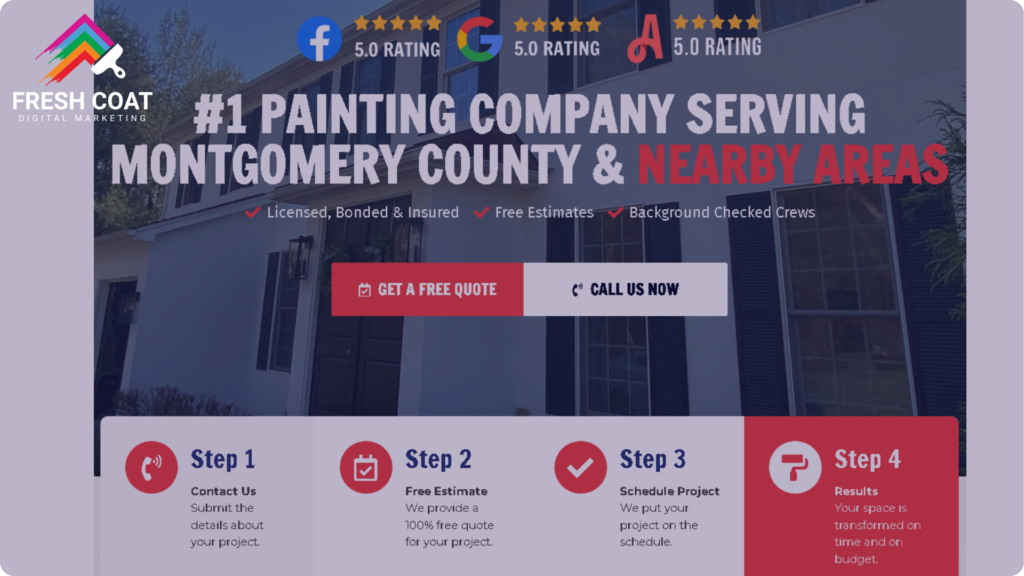
On-page SEO is the process of optimizing the actual pages on your website so that search engines can easily understand what they are about and rank them accordingly. It’s the technical foundation that supports all your other marketing efforts. Think of it as making sure your house is not only beautiful but also structurally sound and easy to navigate. It’s about making your content work for you, efficiently and effectively.
Mapping Keywords to Specific Pages: Precision Targeting is Key
Don’t try to rank your homepage for every single painting service you offer. That’s a recipe for confusion. Instead, create dedicated, highly optimized pages for each specific service: “Interior Painting,” “Exterior Painting,” “Cabinet Refinishing,” “Deck Staining,” etc. Optimize each page specifically for those terms. This clear organization helps both users and search engines understand exactly what each page offers. It’s about giving Google exactly what it’s looking for. Be precise, be deliberate.
The Art of the Title Tag and Meta Description: Your Digital Billboard
When your website appears in a Google search result, the user sees two main things: the Title Tag (the clickable blue link) and the Meta Description (the short paragraph below it). These are your digital billboards. Keep title tags under 60 characters and meta descriptions under 160 characters. Make them compelling. Instead of just “Interior Painting | Smith Painting,” try “Expert Interior Painting in [City] | Flawless Results | Smith Painting.” Your goal here is to entice the click, to make them choose your link from a sea of others. Make it irresistible. This is your first impression, make it count.
Structuring Content with Headings (H1, H2, H3): Readability and SEO Go Hand-in-Hand
Search engines use headings to understand the hierarchy and structure of your content. There should only be one H1 per page, and it should clearly state the page’s topic. Use H2s and H3s to break up your content into logical, readable sections. For an exterior painting page, your H2s might be “Our Exterior Painting Process,” “Types of Siding We Paint,” and “Why Choose Us for Your Exterior.” This makes the text scannable for humans and easily digestible for search engine bots, improving both user experience and SEO. A well-structured page is a happy page, for both users and Google. It’s a win-win.
Hyper-Local SEO: Winning Your Service Area – Own Your Neighborhood, Block by Block
For a painting contractor, all business is local. Therefore, your SEO efforts must be intensely local. This goes beyond just mentioning your city on your homepage. Hyper-local SEO means proving to Google that you are the dominant, most relevant painter for a specific geographic area, right down to the neighborhood level. This is where you truly become the “go-to” painter. It’s about being the local legend. Don’t just be a painter; be the painter for your community.
Creating Dedicated Location Pages: Your Local Footprint, Amplified
If you serve several distinct cities, suburbs, or even large neighborhoods, create a dedicated page on your website for each one. For example, a page titled “Interior Painting Services in [Suburb A]” and another for “Exterior Painters in [Suburb B].” On these pages, include testimonials from clients in that specific area, photos of jobs you’ve completed there, and mention local landmarks or community specifics. This hyper-local targeting is incredibly effective and signals strong geographic relevance to Google. It shows you’re not just a general contractor; you’re their local expert. Make it personal. This level of detail builds immense trust.
Embedding Local Maps: Visual Confirmation and Trust Signals
On your contact page and location pages, embed a Google Map showing your business location or service area. This provides a clear visual cue to both users and search engines. It reinforces your physical presence and makes it easier for customers to find you. A map isn’t just navigation; it’s a trust signal. It says, “We’re here, we’re real, and we’re ready to serve you.”
Leveraging Local Keywords: Speaking Their Language, Naturally
Naturally weave local modifiers into your content. Instead of just “cabinet refinishing,” use phrases like “cabinet refinishing services for [Neighborhood] homeowners.” This aligns with how real people search for local services. Think about how you’d talk to a neighbor about your services – that’s the language you want to use. Keep it authentic. It’s about connecting on a human level.
Technical SEO: The Unseen Engine of Your Website’s Health – Don’t Let Your Foundation Crumble
Think of technical SEO as the foundation of your house. If the foundation is cracked, it doesn’t matter how beautiful the paint job is. A technically unsound website will never rank well, no matter how great your content is. It’s the silent killer of many online marketing efforts. You wouldn’t build a house on sand, so don’t build your online presence on a shaky technical foundation. This is non-negotiable for long-term success.
Website Speed: The Core Web Vitals Imperative – Every Millisecond Counts
We cannot overstate this: If your website is slow, you are losing money. Google’s Core Web Vitals (metrics that measure loading performance, interactivity, and visual stability) are direct ranking factors . Homeowners are impatient. If your site takes more than three seconds to load, they will hit the back button and go to your competitor. Compress your images, leverage browser caching, and ensure your hosting provider is up to par. You can check your site’s speed using Google’s free PageSpeed Insights tool. Don’t just aim for fast; aim for lightning fast. It’s a competitive edge. Speed is a feature, not a luxury.
Mobile-First Design: The Smartphone Standard – Your Site in Their Pocket
Google now primarily uses the mobile version of your website to determine its ranking. If your site requires users to pinch and zoom to read the text on their phone, Google will penalize you. Your site must be fully responsive and provide a flawless experience on a smartphone. Most of your potential clients are browsing on their phones; make it easy for them. It’s not an option anymore; it’s a necessity. Adapt or be left behind.
HTTPS Security: Building Trust Online – Lock It Down
Ensure your entire website uses HTTPS. This encrypts data between your site and users, protecting their privacy. It’s a basic requirement for trustworthiness and a confirmed, albeit small, ranking signal. Without it, browsers will flag your site as “not secure,” instantly eroding trust. Don’t give potential clients any reason to doubt you. Security is paramount.
The Secret Weapon: Schema Markup for Clarity – Speaking Google’s Language
Schema markup (or structured data) is a type of code you add to your website that helps search engines understand the specific context of your content. It’s like providing a direct translation dictionary to Google. For a painting business, implementing LocalBusiness schema is essential. It explicitly tells Google your business name, address, phone number, opening hours, and geographic coordinates. You can also use Review schema to display your star ratings directly in the search results, which significantly increases click-through rates . While it sounds technical, many modern website builders and plugins make adding schema relatively straightforward. Don’t skip this; it’s how you speak Google’s language. It’s a powerful, yet often underutilized, tool. Use it to your advantage.
Off-Page SEO & Link Building: Building Your Digital Reputation – The Word on the Street
If on-page SEO is about making your website relevant, off-page SEO is about making it authoritative. It’s about proving to Google that other people on the internet trust and value your business. In the early days of SEO, whoever had the most links pointing to their website won. It didn’t matter where those links came from. Today, quality completely trumps quantity. A single link from a highly respected, relevant local website is worth more than a hundred links from spammy directories. It’s about who vouches for you. And that, my friend, is invaluable. Your reputation is everything.
Earning High-Quality, Relevant Backlinks: Your Digital Endorsements
How does a painting contractor earn good links? It requires effort and relationship building. Sponsor a local youth sports team, a charity 5K run, or a community event. These organizations often list their sponsors on their websites with a link back to your site. These are incredibly powerful, locally relevant links. Do you exclusively use Sherwin-Williams or Benjamin Moore products? Check if they have a “Find a Contractor” directory on their website. Getting listed there provides a highly authoritative, industry-specific link. Also, consider collaborating with local real estate agents or interior designers for guest blog posts or joint projects. Their endorsement can be golden. Think creatively; opportunities are everywhere. Build bridges, not walls.
Mastering Local Citations: Consistent Presence is Crucial
A citation is any online mention of your business’s Name, Address, and Phone number (NAP). While not as powerful as a direct backlink, consistent citations across the web validate your business’s existence and location to Google. Ensure your business is listed accurately on major directories like Yelp, Angi, HomeAdvisor, Yellow Pages, Better Business Bureau (BBB), and your local Chamber of Commerce. The key here is absolute consistency. Any discrepancies can confuse search engines and dilute your local SEO efforts. Tools like Yext or BrightLocal can help manage these citations efficiently, saving you hours of manual work and headaches. Don’t let sloppy data undermine your hard work. Precision matters.
The Power of Video SEO: Engaging with YouTube and Social Video – Show, Don’t Just Tell
YouTube is the second largest search engine in the world, owned by Google. Video content is incredibly engaging and often ranks highly in standard Google search results. For a painting contractor, video is a goldmine. It allows you to showcase your work, your personality, and your expertise in a way that text and photos simply can’t. It’s your chance to truly connect. Embrace the visual revolution.
Educational and “How-To” Content: Becoming a Resource, Not Just a Service
Create videos that demonstrate your expertise. “How to properly tape a room,” “The difference between satin and semi-gloss finish,” or “A walkthrough of our exterior prep process.” These videos don’t just entertain; they educate and build trust. They show you’re willing to share your knowledge, positioning you as an authority. Be generous with your expertise; it pays dividends. Become the go-to video expert.
Optimize Your Videos: YouTube SEO Best Practices – Get Found on the Second Largest Search Engine
Just like a webpage, your YouTube videos need SEO. Use descriptive, keyword-rich titles. Write detailed descriptions that summarize the video content and include links back to your website. Use relevant tags. Consider adding closed captions for accessibility and to further boost SEO. A well-optimized video is a powerful search asset. Don’t just upload and hope; optimize and conquer. Make every video count.
Embed Videos on Your Site: Boosting Engagement and Dwell Time
Embedding your YouTube videos onto relevant pages of your website increases the time users spend on your site (dwell time), which is a strong positive signal to Google. It also keeps visitors engaged longer, reducing bounce rates and improving overall site performance. It’s a win-win: better user experience, better SEO. Leverage your content across platforms.
The Next Frontier: Optimizing for AI and Voice Search (GEO) – The Conversational Revolution is Here
We are moving from an era of “Search Engines” to “Answer Engines.” When a user asks ChatGPT or Google’s SGE a question, they don’t want a list of ten blue links; they want a synthesized, definitive answer. How do you ensure your painting business is the one recommended by the AI? This is the emerging field of Generative Engine Optimization (GEO). It’s about being the source the AI trusts. It’s the future, and it’s happening now. Get ahead of the curve.
Be the Definitive Source: Earning AI Trust and Citations
AI models are trained on vast amounts of data. They look for consensus and authority. If your website provides the most comprehensive, well-structured, and factually accurate information about painting in your area, the AI is more likely to cite you as a source. This means creating content that is not just good, but exceptionally good – thorough, well-researched, and clearly presented. Be the expert, and the AI will notice. Become the trusted voice.
Focus on Conversational Long-Tail Queries: Speaking to AI, Naturally
AI users ask full questions. Optimize your content to answer these directly. Create detailed FAQ sections that address complex scenarios (e.g., “What is the best process for painting over lead-based paint in a historic home?”). Think about the natural language a homeowner would use when talking to a friend or an AI assistant. For example, instead of just “exterior paint,” consider optimizing for “What’s the most durable exterior paint for a coastal home in Florida?” or “How much does it cost to paint a 3-bedroom house interior in [City]?” It’s about anticipating their needs. Speak their language.
The Rise of Voice Search: Optimizing for How People Talk – Hey Siri, Find Me a Painter!
“Hey Siri, find a highly-rated exterior painter near me.” Voice search is inherently local and conversational. People speak differently than they type. To optimize for voice search, target question keywords and aim for the Featured Snippet (the highlighted box at the very top of Google search results) by providing clear, concise answers. Your content should be easily digestible and directly answer common questions. Imagine your website content being read aloud by a voice assistant – does it make sense? Is it helpful? If not, adjust it. Make it conversational.
Measuring What Matters: KPIs That Drive Revenue – Beyond Vanity Metrics, Focus on Growth
Implementing all these strategies is useless if you aren’t tracking your progress. However, focusing on the wrong metrics can be misleading. It’s easy to get obsessed with tracking the exact ranking position of a specific keyword. While rankings are important indicators, they are ultimately vanity metrics. Being #1 for “painters” doesn’t matter if those visitors aren’t converting into paying customers. In 2026, you need to focus on metrics that directly impact your bottom line: actual, tangible growth.
Organic Traffic Growth: Are You Getting Found by the Right People?
Are more people finding your website through search engines over time? Use Google Analytics 4 (GA4) to track the overall trend of your organic traffic. But don’t just look at the numbers; analyze where they’re coming from and what they’re doing on your site. Quality traffic beats quantity every time. Focus on the right audience.
Conversion Rate from Organic Search: Are They Taking Action and Becoming Leads?
This is the critical metric. Of the people who visit your site from Google, how many are filling out a contact form or calling your office? If your traffic is high but conversions are low, you have a problem with your website’s user experience or your messaging. This tells you if your SEO efforts are actually bringing in business. It’s the ultimate litmus test. Are you turning visitors into customers?
Google Business Profile Interactions: Local Engagement and Direct Leads
Monitor the insights provided within your GBP dashboard. Are you seeing an increase in phone calls, requests for directions, and clicks to your website directly from your local listing? These are direct signals of local engagement and intent. Your GBP is a lead magnet; make sure it’s working overtime. It’s your local powerhouse.
Cost Per Lead (CPL) from SEO: Proving ROI and Smart Spending
Compare the cost of your SEO efforts (whether it’s your time or an agency’s fee) against the number of qualified leads generated. SEO is a long-term investment, but over time, it should yield the lowest CPL of any marketing channel. This is how you prove ROI. Show them the money! Every dollar counts.
Essential SEO Tools for Your Toolkit: Your Digital Workbench is Ready
To effectively implement and monitor your SEO strategy, you need a suite of powerful tools. While you don’t need to be an expert in all of them, being familiar with what they do is crucial for success. Think of these as the specialized brushes and rollers for your digital canvas. Equip yourself wisely. Don’t go to battle unarmed.
| Category | Tool Examples | Key Functionality |
| Keyword Research & Competitor Analysis | Semrush, Ahrefs, Google Keyword Planner | Identify high-value keywords, analyze competitor strategies, track rankings. These are your reconnaissance tools. |
| Technical SEO & Site Audit | Google Search Console, Google PageSpeed Insights, Screaming Frog SEO Spider | Monitor site health, identify crawl errors, check Core Web Vitals, analyze internal linking. Your digital mechanic’s toolkit. |
| Local SEO Management | BrightLocal, Moz Local, Yext | Manage GBP, monitor local rankings, ensure NAP consistency across directories, track reviews. Essential for local dominance. |
| Content Optimization & E-E-A-T | Surfer SEO, Frase.io, Clearscope | Optimize content for semantic relevance, identify content gaps, improve readability, ensure E-E-A-T signals. Your content quality control. |
| AI Visibility & GEO Tracking | Profound, GetCito, Semrush AI Visibility Toolkit | Monitor brand mentions and citations within AI-generated answers (ChatGPT, Perplexity, Gemini), track Share of Model. The cutting edge of SEO. |
| Analytics & Reporting | Google Analytics 4 (GA4), Looker Studio | Track website traffic, user behavior, conversions, and create custom reports. Your business intelligence dashboard. |
The Psychology of the Modern Homeowner: What Drives Their Decisions in 2026 – Beyond the Paint Swatch
Understanding the technicalities of SEO is one thing, but truly connecting with your audience requires delving into their psychology. In 2026, homeowners are savvier, more informed, and more discerning than ever before. They’re not just looking for a painter; they’re looking for a partner they can trust with their most valuable asset – their home. This isn’t just about painting; it’s about peace of mind. It’s about understanding their unspoken needs. Get inside their heads.
The Quest for Trust and Transparency: Beyond the Sales Pitch, It’s About Integrity
With so many options available online, homeowners are wary of businesses that seem too good to be true. They crave authenticity. This means transparent pricing (even if it’s a range), clear communication about processes, and genuine testimonials. They want to see that you’re a real business with real people, not just a slick website. They’re looking for honesty, not just a sales pitch. Be the real deal. Your reputation depends on it.
Value Over Lowest Price: An Investment, Not Just an Expense – Quality Pays Off
While budget is always a consideration, the modern homeowner often prioritizes value, durability, and peace of mind over simply the cheapest quote. They understand that a quality paint job is an investment. Your content should reflect this by highlighting the longevity of your work, the quality of your materials, and your commitment to customer satisfaction. Emphasize the long-term benefits, not just the immediate cost. You get what you pay for, right? Educate your clients.
Convenience and Efficiency: Making Life Easier – Seamless Service is a Must
Life is busy. Homeowners appreciate businesses that make the process easy. This translates to clear online booking options, prompt responses to inquiries, and efficient project management. Your SEO efforts should guide them seamlessly from search to conversion. Make it effortless for them to do business with you. Time is money, for everyone. Respect their time.
Social Proof is Paramount: What Others Say Matters Most – Your Reputation Precedes You
As we discussed with reviews, what others say about you carries immense weight. Beyond Google reviews, homeowners are checking social media, local forums, and asking friends. Your online reputation is your most powerful sales tool. Cultivate it diligently. It’s your digital word-of-mouth, amplified. Let your happy customers do the talking.
Common SEO Pitfalls for Painters (And How to Avoid Them) – Learn from Others’ Mistakes, Not Your Own
Even with the best intentions, it’s easy to stumble. Here are some common mistakes painting contractors make with their SEO, and how you can steer clear of them. Consider these hard-won lessons from the trenches. Don’t reinvent the wheel of failure. Be smart, not sorry.
Ignoring Local SEO: A Fatal Flaw – Your Business is Local, Your SEO Should Be Too
This is perhaps the biggest sin. Thinking global when your business is inherently local is a recipe for wasted effort. Focus 80% of your SEO energy on local strategies. Your customers are local, so your SEO should be too. It’s common sense, really. Don’t miss this crucial step.
Keyword Stuffing: An Outdated Tactic – Google is Smarter Now
Trying to cram too many keywords into your content will not only make it unreadable for humans but will also get you penalized by Google. Write naturally, for your audience, and let keywords flow organically. Google is smarter than that now. Write for people, not robots. Authenticity wins.
Neglecting Your Google Business Profile: The Abandoned Storefront – Treat It Like Gold
Setting it up once and forgetting it is like opening a store and never stocking the shelves. It needs constant attention, updates, and review management. Treat it like your most important employee. It’s your digital front door. Keep it polished.
Having a Slow, Non-Mobile-Friendly Website: The Deal-Breaker – No Excuses in 2026
This is a deal-breaker in 2026. If your site isn’t fast and responsive, you’re losing potential clients before they even see your work. Period. No excuses. Get it right, or get left behind. Speed and accessibility are king.
Lack of Fresh Content: Stagnation is Death – Keep It Alive
Google loves fresh, relevant content. If your blog hasn’t been updated in two years, it signals to Google that your site is stagnant. Regularly publish new articles, case studies, and project updates. Show that you’re active and engaged. A living website is a thriving website. Keep the content flowing.
Buying Low-Quality Backlinks: The Dangerous Shortcut – Earn Your Authority
This is a dangerous shortcut that can lead to severe penalties. Focus on earning genuine, high-quality links through valuable content and relationships. It’s a marathon, not a sprint. Build real connections, not fake ones. Integrity over shortcuts.
Not Tracking Results: Flying Blind – Data is Your Compass
If you’re not measuring, you’re guessing. Use Google Analytics and your GBP insights to understand what’s working and what isn’t. Data is your compass. Don’t just hope for the best; know what’s happening. Make informed decisions.
Conclusion: The Canvas is Yours to Command – Paint Your Future, Digitally
Mastering SEO for your painting business in 2026 is not a one-time project; it is an ongoing commitment to digital excellence. It requires moving beyond outdated tactics and embracing a holistic strategy that prioritizes user experience, demonstrable expertise, and adaptation to emerging technologies like AI and voice search. By meticulously optimizing your Google Business Profile, building unshakable E-E-A-T, structuring your website for both humans and algorithms, and cultivating a strong off-page reputation, you can elevate your business above the local competition.
The digital landscape is your canvas. With the right strategies, you can paint a masterpiece of visibility, trust, and sustained growth. Don’t let your competitors dictate the narrative. Take control of your online presence and ensure that when a homeowner in your area needs a painter, your name is the only one they consider. It’s your time to shine. Go out there and claim it! Your success story awaits.
Ready to Stop Guessing and Start Growing? Your Next Masterpiece Awaits.
Navigating the complexities of modern SEO while trying to run a demanding painting business is a daunting task. You shouldn’t have to be a digital marketing expert to succeed. If you’re ready to implement a proven, data-driven SEO strategy that consistently fills your pipeline with high-quality, ready-to-hire leads, the team at Fresh Coat Marketing is here to partner with you. We don’t do generic marketing; we specialize exclusively in helping painting contractors dominate their local markets. We speak your language, and we understand your business. Let us help you paint a brighter future.
.